The Bose CineMate Series II delivers immersive sound for your home theater, simplifying setup and operation with a user-friendly manual and streamlined design.

Overview of the System
The Bose CineMate Series II is a two-piece audio system designed to dramatically enhance your television’s sound. It comprises a sleek acoustic mass module and a soundbar, offering a significant upgrade over standard TV speakers without the complexity of a full surround sound setup. This system prioritizes simplicity, aiming for easy installation and operation, as detailed in the comprehensive user manual.
Unlike traditional home theater systems requiring multiple speakers and intricate wiring, the CineMate Series II focuses on delivering wide, immersive sound from just two components. The acoustic mass module provides deep bass, while the soundbar clarifies dialogue and expands the soundstage. The system is compatible with most modern televisions and audio sources, offering both optical and analog audio connections for versatile integration into your existing home entertainment setup.
Key Features and Benefits
The Bose CineMate Series II boasts several key features enhancing the home theater experience. Wideband digital signal processing creates a spacious soundstage, simulating surround sound from a compact system. Video-optimized equalization ensures audio clarity without compromising picture quality. The system’s compact design integrates seamlessly into most entertainment centers, as illustrated in the manual.
Benefits include simplified setup – minimizing wiring and configuration hassles. Users enjoy dramatically improved audio performance for movies, TV shows, and music. The intuitive remote control offers convenient operation. Furthermore, the system’s reliability and Bose’s reputation for quality provide peace of mind. The manual details how to maximize these features, offering troubleshooting tips and guidance for optimal performance and long-term enjoyment.
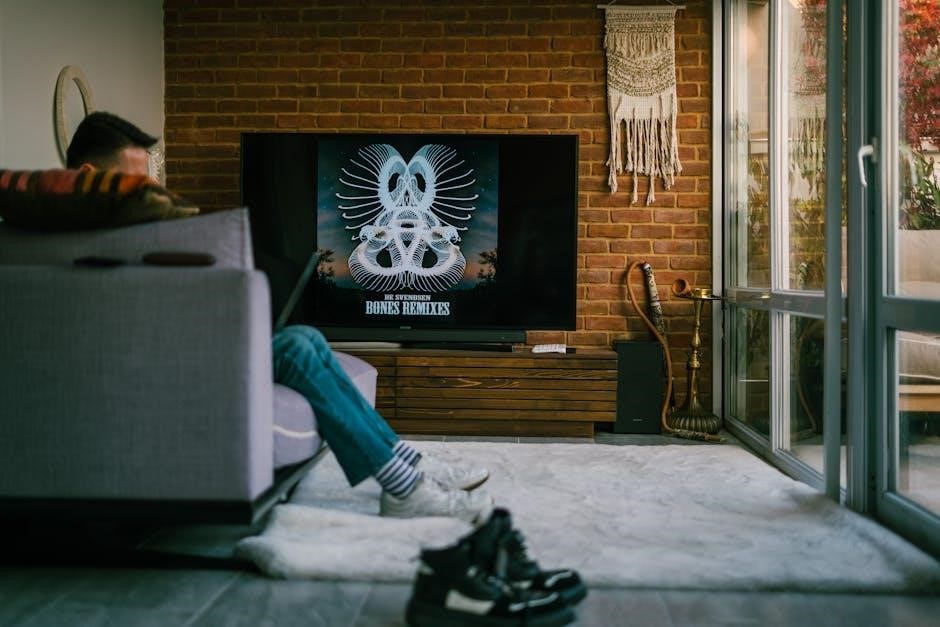
Setting Up Your CineMate Series II
Proper setup, guided by the manual, ensures optimal performance. Carefully unpack components, connect to your TV using optical or analog audio, and position speakers correctly.
Unboxing and Component Check
Carefully unpack your Bose CineMate Series II system. The box should contain the acoustic array speaker, the wired bass module, a remote control, power cords for both units, and the system documentation – crucially, the user manual.
Thoroughly inspect each component for any visible damage that may have occurred during shipping. Verify that all included items match the packing list detailed within the manual. If anything is missing or damaged, immediately contact Bose customer support.
Retain the original packaging for potential future transport or if a return is necessary. Familiarize yourself with the location of each port on the acoustic array and bass module, referencing the diagrams in the manual to understand their functions before proceeding with connections.
Connecting to Your TV
The CineMate Series II connects to your TV via either optical audio or analog audio connections, as detailed in the manual. Optical is preferred for superior sound quality and is generally simpler to set up. Locate the optical audio output on your TV – consult your TV’s manual if needed.
Connect the included optical cable from the TV’s optical output to the corresponding input on the CineMate acoustic array. For analog connections, use RCA cables (not included) connecting the TV’s audio outputs to the CineMate’s analog inputs.
Ensure the TV’s audio output is configured correctly in the TV’s settings menu to match the chosen connection type (optical or analog). The Bose manual provides specific guidance for common TV brands.
Optical Audio Connection
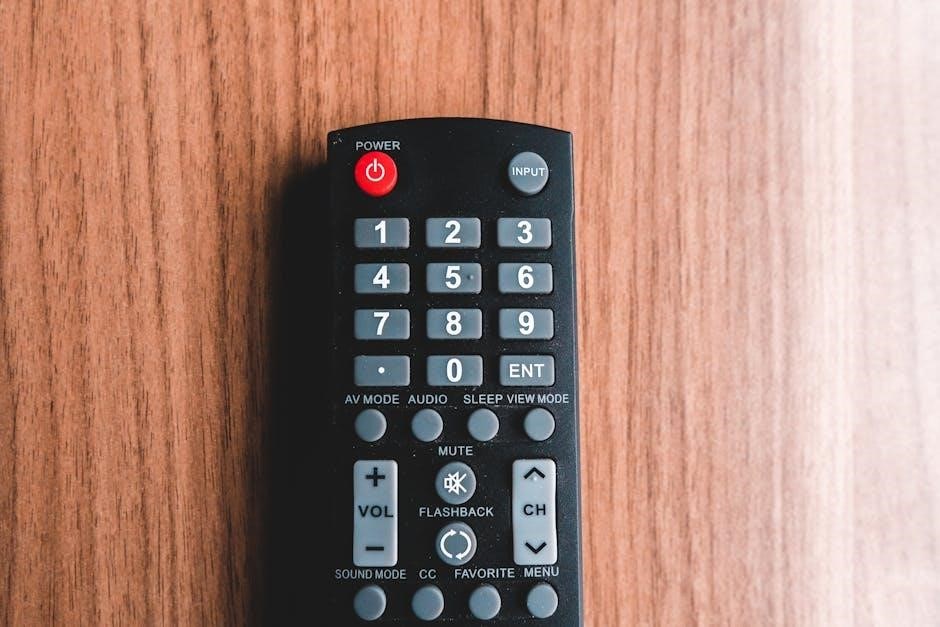
Utilizing the optical audio connection offers the best possible sound quality from your Bose CineMate Series II system. Locate the optical audio output port on your television – it’s typically labeled “Optical,” “Digital Audio Out,” or “Toslink.” Connect one end of the included optical cable securely into this port.
Next, connect the other end of the optical cable to the “Optical In” port on the back of the CineMate console. Ensure the cable clicks firmly into place. Within your television’s audio settings menu, select “Optical” or “Digital Audio Out” as the audio output source.
Refer to your TV’s manual for specific instructions on navigating these settings. The Bose CineMate Series II manual also provides helpful guidance for common television brands, ensuring optimal audio transmission.
Analog Audio Connection
If your television lacks an optical audio output, you can utilize an analog audio connection with the Bose CineMate Series II. Locate the RCA audio output jacks on your TV, typically colored red and white. Connect an RCA stereo cable (not always included) to these jacks.
Match the colors carefully – red to red, and white to white. Then, connect the other end of the RCA cable to the corresponding “Audio In” jacks on the back of the CineMate console. Within your television’s audio settings, select “Analog Audio Out” or “RCA” as the audio output source.
Note that analog connections may not deliver the same high-fidelity audio as optical connections. Consult your TV’s manual and the Bose CineMate Series II manual for detailed setup instructions and troubleshooting tips.
Speaker Placement Recommendations
Optimal speaker placement is crucial for achieving the best surround sound experience with your Bose CineMate Series II. Position the front speakers on either side of your television, angled slightly inward towards the primary listening position. Ensure they are stable and at ear level for immersive audio.
The Acoustimass module, responsible for low-frequency effects, can be placed on the floor, ideally along a wall. Experiment with its location to find the spot that delivers the most impactful bass without being overly boomy. Avoid placing it directly in a corner.
Refer to the detailed diagrams in the CineMate Series II manual for precise measurements and alternative placement options based on your room’s layout. Proper placement significantly enhances the system’s performance.

Using the Remote Control
The Bose CineMate remote offers intuitive control over your system’s functions, including volume, input selection, and system settings, as detailed in the manual.
Remote Control Layout and Functions
The Bose CineMate Series II remote control is designed for simplicity and ease of use. At the top, you’ll find the power button, allowing you to turn the system on or off. Below that are dedicated volume up and down buttons for quick audio adjustments. The input selection buttons cycle through available sources connected to your system, such as TV, optical, or auxiliary inputs.
A central navigation pad facilitates menu navigation and setting adjustments. Dedicated buttons provide direct access to key features like sound modes and system setup. The ‘Mute’ button instantly silences the audio output. The remote’s layout is logically organized, ensuring a user-friendly experience. Refer to the manual for a detailed diagram and explanation of each button’s specific function, maximizing your control over the CineMate Series II.
Programming the Remote
Programming the Bose CineMate Series II remote to control other devices, like your TV, requires following a specific procedure outlined in the system’s manual. Begin by entering ‘learning mode’ – typically achieved by pressing and holding a designated ‘Setup’ or ‘Learn’ button. The remote will then prompt you to enter the manufacturer’s code for your TV brand.
These codes are listed in the manual’s comprehensive code library. Once the code is entered, the remote will attempt to communicate with your TV. If successful, test the functionality by attempting to control power or volume. If the initial code doesn’t work, try alternative codes for your TV brand. Careful adherence to the manual’s instructions is crucial for successful programming.
Troubleshooting Remote Issues
If your Bose CineMate Series II remote isn’t functioning, the manual suggests several troubleshooting steps. First, ensure fresh batteries are correctly installed, verifying polarity. Next, try resetting the remote by removing the batteries for several minutes, then reinserting them. If the remote still fails, check for obstructions between the remote and the CineMate console.
Interference from other electronic devices can sometimes disrupt the signal. Reprogramming the remote, as detailed in the manual, can also resolve connectivity problems. If none of these steps work, consult the manual’s section on factory resetting the system. As a last resort, contact Bose customer support for further assistance, referencing your system’s model number.

Understanding the System Settings
The CineMate Series II manual details audio level adjustments, surround sound configuration, and EQ customization options for a personalized listening experience.
Adjusting Audio Levels
The Bose CineMate Series II manual provides comprehensive instructions for fine-tuning your audio experience. Users can precisely control the overall system volume using the remote, ensuring comfortable listening at any time. Furthermore, the manual details how to adjust the center channel level, crucial for clear dialogue during movies and television programs.
Individual speaker levels can also be adjusted to balance the soundstage according to your room’s acoustics and personal preferences. The manual explains how to access these settings through the system’s menu, offering a step-by-step guide. It also highlights the importance of avoiding excessively high volume levels to prevent distortion and potential damage to the speakers. Proper level adjustment enhances clarity and immersiveness, maximizing the CineMate Series II’s performance.
Setting Up Surround Sound
The Bose CineMate Series II manual guides users through configuring a simulated surround sound experience, despite the system utilizing only two speakers and a subwoofer. The manual details accessing the “Surround Sound” settings within the system menu via the remote control; Users can select from various preset modes, optimized for different content types like movies, music, and television.
The manual explains how these modes utilize Bose’s proprietary digital signal processing to create a wider, more immersive soundstage. It also advises experimenting with different settings to find the optimal configuration for your room and listening preferences. While not true discrete surround sound, the CineMate II aims to deliver a convincing spatial audio effect, enhancing the overall home theater experience as described in the manual.
Customizing EQ Settings
The Bose CineMate Series II manual outlines limited equalization (EQ) customization options. Unlike systems with extensive graphic equalizers, the CineMate II primarily offers preset audio modes – such as “Movie,” “Music,” and “Video Game” – each with a pre-defined EQ curve. The manual details how to cycle through these modes using the remote control.
However, the manual also mentions a “Bass” control, allowing users to adjust the subwoofer’s output level. This provides some degree of tonal control, enabling users to tailor the low-frequency response to their room and preferences. The manual cautions against excessive bass boosting, which can lead to distortion. While not full EQ customization, these settings allow for basic sound shaping, as explained within the user guide.
Troubleshooting Common Issues
The CineMate Series II manual provides solutions for typical problems like no sound, distortion, or remote control malfunctions, ensuring a smooth user experience.
No Sound Output
If you experience no sound with your Bose CineMate Series II, the manual suggests several checks. First, verify the system is powered on and the volume is not muted. Confirm the optical or analog audio cable is securely connected to both the TV and the CineMate system.
Next, ensure your TV’s audio output is set to the correct source – optical or analog – corresponding to your connection method. The manual details how to access these settings on most common TV brands.
Also, test with a different audio source (like a DVD player) to isolate the issue. If the problem persists, consult the manual’s troubleshooting section for factory reset instructions or contact Bose customer support for further assistance. A quick system reboot often resolves minor glitches.
Distorted Sound
Distorted sound from your Bose CineMate Series II often indicates an issue with audio levels or speaker placement, as detailed in the manual. Begin by lowering the system’s volume and the TV’s volume independently, then gradually increasing them to identify the distortion point. Avoid excessively high volume settings.
Check for obstructions near the speakers that might be interfering with sound clarity. The manual recommends optimal speaker placement for balanced audio. Ensure the acoustic array speaker isn’t positioned too close to walls or other surfaces, which can cause reflections and distortion.
If distortion persists, try resetting the system to its factory settings, as outlined in the manual. Contact Bose support if the problem continues, providing details about the type of distortion and when it occurs.
Remote Control Not Working
If your Bose CineMate Series II remote isn’t functioning, the first step, as detailed in the manual, is to replace the batteries with fresh ones. Ensure correct battery polarity during installation. Next, verify there are no obstructions between the remote and the acoustic array speaker; a clear line of sight is crucial.
The manual outlines a reprogramming procedure for the remote. Try re-pairing the remote with the system by following the instructions in the manual. If the remote still fails to operate, attempt a system reset of the CineMate Series II. This often resolves software glitches affecting remote functionality.
Should issues persist, consult the troubleshooting section of the manual or contact Bose customer support for further assistance.
Maintenance and Care
Regular cleaning and software updates, as outlined in the manual, ensure optimal performance and longevity for your Bose CineMate Series II system.
Cleaning the Speakers
Maintaining the pristine condition of your Bose CineMate Series II speakers is crucial for both aesthetics and optimal sound quality. The user manual recommends a gentle cleaning approach. Begin by disconnecting the speakers from the power source. Use a soft, dry cloth to dust the exterior surfaces, removing any accumulated dust or debris.
For more stubborn marks, lightly dampen the cloth with water – never apply liquids directly to the speakers. Avoid using harsh chemicals, abrasive cleaners, or solvents, as these can damage the finish. Pay particular attention to the speaker grilles, ensuring they are free from obstructions. Regularly cleaning your speakers will help preserve their appearance and ensure continued high-fidelity audio performance for years to come.
Software Updates
Keeping your Bose CineMate Series II system up-to-date with the latest software is essential for optimal performance and access to new features. The user manual details how to check for and install updates, typically done through the system’s connection to a TV. Bose periodically releases software enhancements that improve audio quality, fix potential bugs, and enhance compatibility with newer devices.
To initiate an update, navigate to the system settings menu using the remote control. The system will automatically scan for available updates. If an update is found, follow the on-screen prompts to download and install it. Do not interrupt the update process, as this could potentially damage the system. Regularly checking for updates ensures your CineMate Series II continues to deliver the best possible home theater experience.

Customer Reviews and Feedback (as of 03/26/2026)
Analyzing data from 23 sources, customer feedback on the Bose CineMate Series II is mixed, with varying opinions on performance and value.
Positive Reviews Summary
Many users praise the Bose CineMate Series II for its remarkably simple setup process, often highlighting the clear and concise manual as a key factor. Customers consistently report a significant improvement in their home theater audio experience, noting the system’s ability to deliver immersive and dynamic sound. The compact design is frequently lauded, fitting seamlessly into various living spaces without being obtrusive.
Several reviewers specifically mention the ease of connecting the system to their televisions, appreciating the optical and analog audio connection options. Positive feedback also extends to the remote control, described as intuitive and easy to use. Overall, satisfied customers emphasize the CineMate Series II’s value proposition – delivering high-quality Bose sound in a convenient and user-friendly package.
Negative Reviews Summary
A recurring criticism of the Bose CineMate Series II centers around its limitations in creating a truly enveloping surround sound experience, with some users desiring more robust rear speaker options. Several reviewers expressed disappointment with the system’s bass response, finding it lacking for action-packed movies or music with heavy low-end frequencies. A few customers reported difficulties with the remote control, citing occasional unresponsiveness or programming issues.
While the manual is generally considered helpful, some users found certain troubleshooting steps unclear or insufficient. A small number of reviews mention the system’s price point, suggesting it may be expensive compared to competing home theater solutions. Despite these concerns, most negative reviews acknowledge the system’s overall quality but highlight areas for potential improvement.
Neutral Reviews Summary
Many neutral reviews of the Bose CineMate Series II acknowledge its strengths as a convenient and aesthetically pleasing audio solution, but stop short of enthusiastic praise. Users often comment on the system’s ease of setup and the clarity of dialogue, making it suitable for everyday television viewing. However, these reviewers generally agree that the sound quality, while good, doesn’t represent a significant upgrade over many modern flat-screen TVs’ built-in speakers.
The manual receives mixed feedback; some find it comprehensive, while others feel it lacks detail in specific areas. Several neutral reviews highlight the system’s value proposition as being dependent on individual needs and expectations, suggesting it’s a solid choice for casual listeners but may not satisfy audiophiles.